The AI Revolution: Transforming Our World, One Algorithm at a Time
Feb 10, 2026
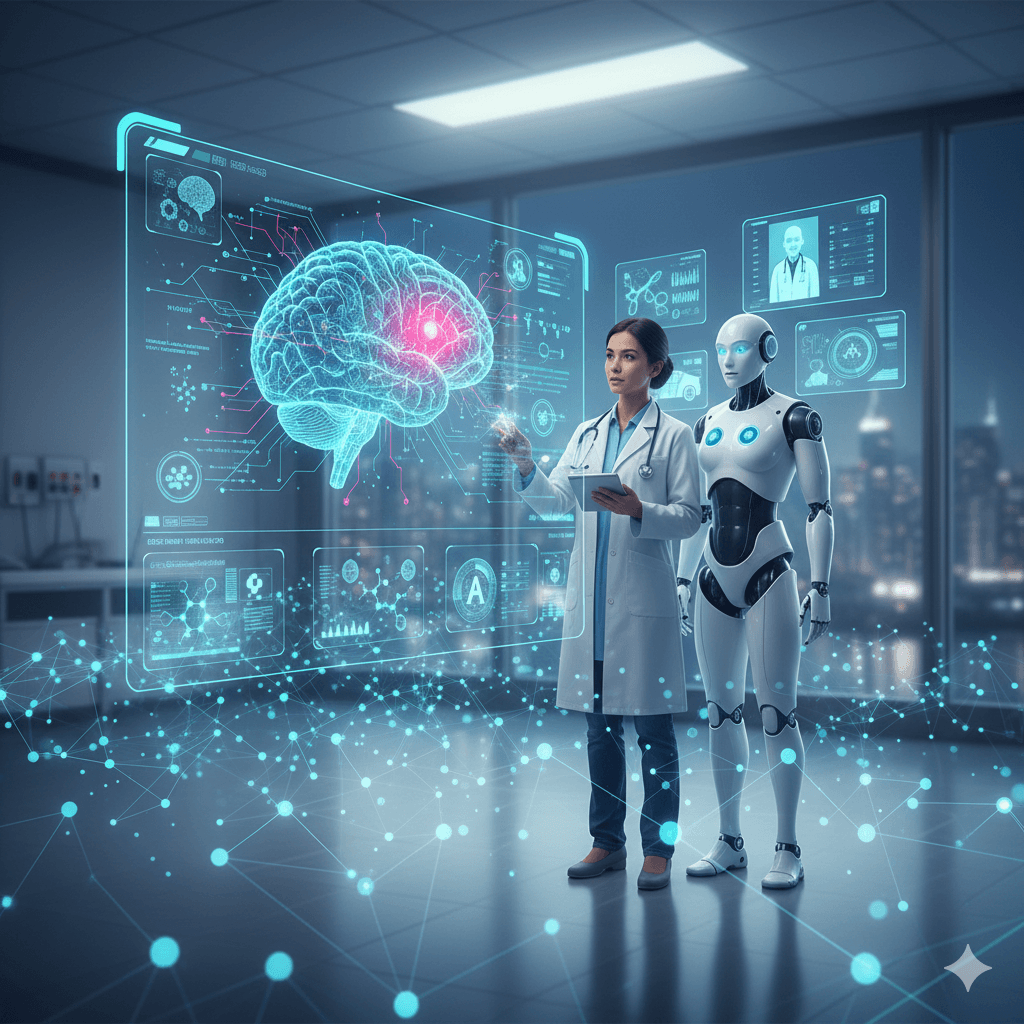
The world is abuzz with talk of Artificial Intelligence (AI), and for good reason. AI is no longer a futuristic concept confined to science fiction; it's here, it's now, and it's rapidly reshaping every facet of our lives. From personalized recommendations to groundbreaking scientific discoveries, AI is the engine driving unprecedented innovation. It's a fundamental shift in how we interact with technology and how technology interacts with the world, promising a future that is both more efficient and more intelligent.
So, what exactly is AI? In its simplest form, AI refers to the simulation of human intelligence in machines that are programmed to think like humans and mimic their actions. This encompasses a broad range of technologies, including machine learning, deep learning, natural language processing (NLP), and computer vision. Machine learning, a core component of AI, allows systems to learn from data without explicit programming, identifying patterns and making predictions. Deep learning, a subset of machine learning, uses neural networks with multiple layers to learn from vast amounts of data, enabling advanced capabilities like image recognition and speech processing. NLP empowers computers to understand, interpret, and generate human language, while computer vision allows machines to "see" and interpret visual information.
One of the most exciting aspects of AI is its ability to learn and adapt. Unlike traditional software, AI systems can improve their performance over time by analyzing vast amounts of data. This "learning" capability allows AI to tackle complex problems that were once thought to be insurmountable. Imagine a medical AI analyzing millions of patient records to identify subtle disease markers, or a financial AI predicting market trends with astounding accuracy. This adaptive nature makes AI a powerful tool for continuous improvement and innovation across countless sectors.
The impact of AI is already being felt across numerous industries. In healthcare, AI is assisting doctors with diagnostics, personalizing treatment plans, and accelerating drug discovery.
In transportation, self-driving cars are on the horizon, promising safer and more efficient travel. In finance, AI algorithms are detecting fraud, optimizing trading strategies, and providing personalized financial advice. Even in our daily lives, AI powers the virtual assistants on our smartphones, the recommendation engines on streaming services, and the smart home devices that make our lives more convenient.
However, with great power comes great responsibility. The rise of AI also brings important ethical considerations and challenges. Questions surrounding data privacy, algorithmic bias, job displacement, and the potential for autonomous systems require careful consideration and robust frameworks. Ensuring that AI is developed and deployed responsibly, with human values at its core, is paramount to harnessing its full potential for good.
The future of AI is incredibly promising, with ongoing research pushing the boundaries of what's possible. We can anticipate even more sophisticated AI systems that can reason, understand context, and interact with us in increasingly natural ways. As AI continues to evolve, it will undoubtedly unlock new opportunities, solve critical global challenges, and fundamentally change how we work, live, and interact with the world around us.
The AI revolution is not just about technology; it's about reimagining the future. By embracing its potential while addressing its challenges, we can ensure that AI serves humanity, creating a world that is smarter, more connected, and more prosperous for all.