The Role of AI in Scientific Discovery and Research
Feb 20, 2026
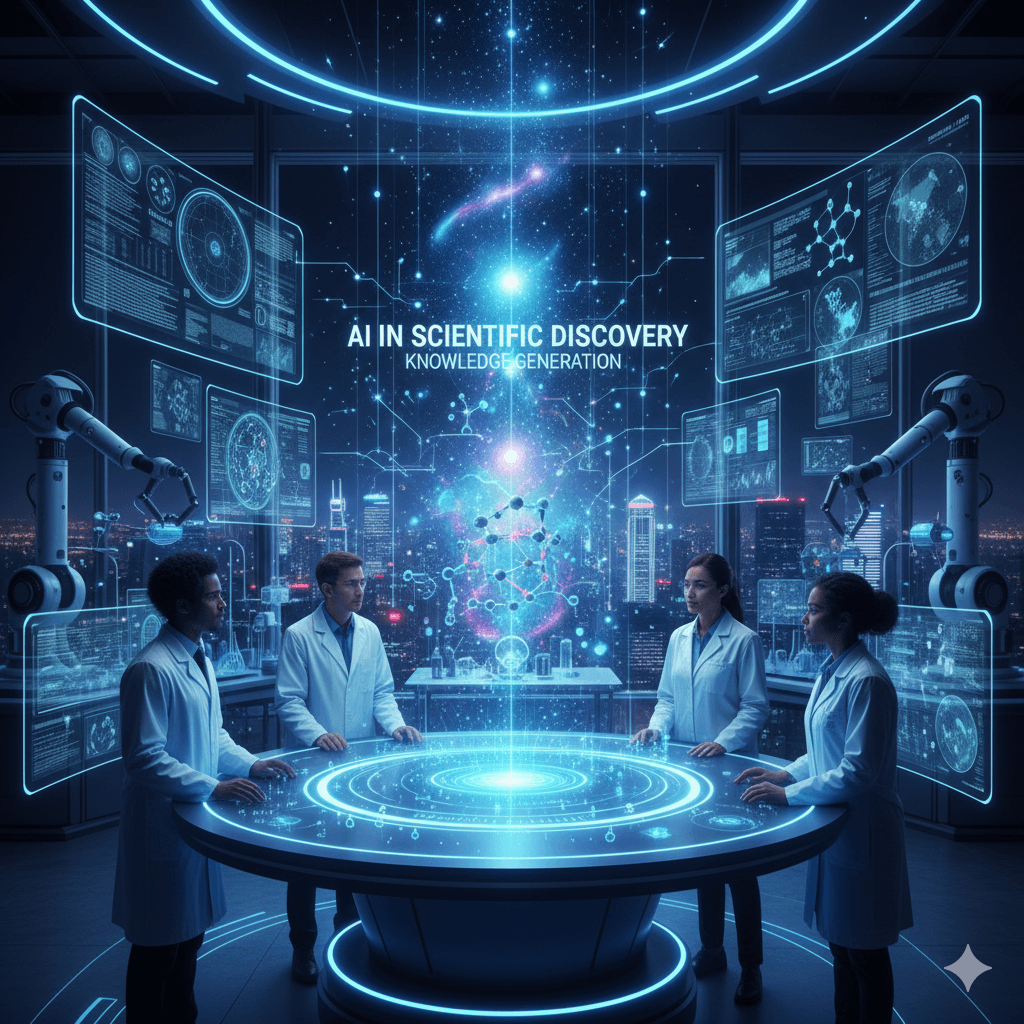
Greetings, fellow explorers of knowledge! Today, let's venture into the realm where AI is accelerating humanity's understanding of the universe: Scientific Discovery and Research. Beyond its applications in business or daily life, AI is fundamentally changing how scientists conduct experiments, analyze data, and formulate groundbreaking theories.
Science has always been about hypothesis, experimentation, and observation. However, the sheer volume of data generated in modern research – from genomics to astrophysics – often overwhelms human capacity for analysis. This is where AI shines. Its ability to process vast datasets, identify subtle correlations, and even predict outcomes is empowering scientists to make discoveries at an unprecedented pace.
In material science, AI can simulate the properties of millions of new materials, helping researchers discover compounds with desired characteristics (like superconductivity or extreme durability) much faster than traditional lab-based trial and error. This can revolutionize industries from electronics to aerospace.
Similarly, in genomics and personalized medicine, AI analyzes complex genetic sequences to identify disease markers, predict drug responses, and even design new therapeutic proteins. This significantly speeds up the process of understanding diseases and developing targeted treatments.
How AI is Revolutionizing Scientific Research:
Accelerated Data Analysis: Processing petabytes of data from experiments, telescopes, and sensors in a fraction of the time it would take humans.
Hypothesis Generation: AI can suggest new hypotheses or experimental avenues based on existing research literature, inspiring new directions for human scientists.
Simulation & Modeling: Creating complex simulations of natural phenomena, molecular interactions, or astronomical events, allowing scientists to test theories without costly physical experiments.
Robotics in Labs: AI-controlled robots can perform repetitive experiments with higher precision and throughput, freeing up human researchers for higher-level analytical tasks.
Literature Review & Synthesis: AI can quickly sift through millions of research papers, extracting key information and identifying trends that might otherwise be missed.
AI is not replacing scientists; rather, it is acting as a powerful microscope and telescope for the mind, extending human intellect and allowing researchers to ask bigger questions and find answers faster. By automating the tedious and computationally intensive aspects of research, AI enables scientists to focus on creativity, intuition, and the profound act of discovery.
What scientific field do you believe AI will revolutionize the most in the coming years? Share your thoughts in the comments!
Onward to discovery, Your AI Expert